


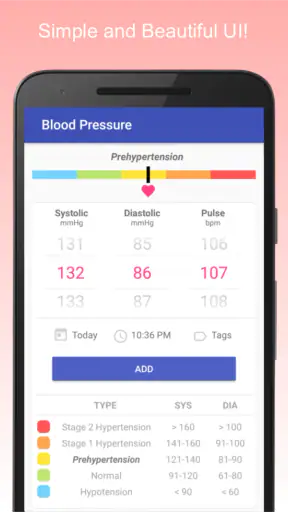
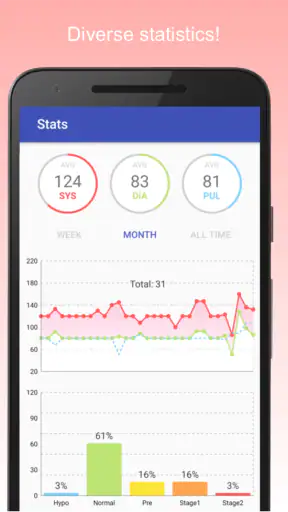
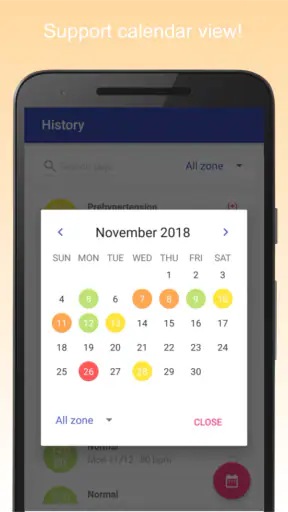
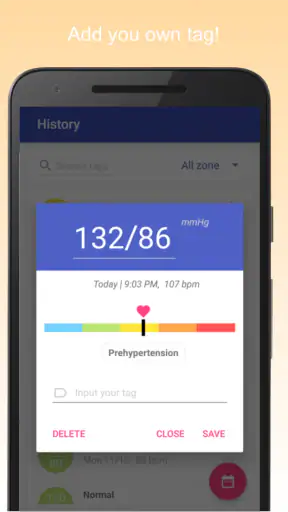
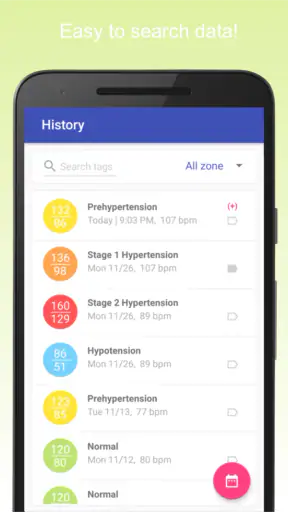
Blood Pressure Diary is the kind of medical app I would use as a companion to a real home blood pressure monitor, not as a replacement for one. Its purpose is straightforward: it gives me a place to record blood pressure and pulse readings so I can look back at them instead of relying on memory or loose notes. That simple focus is also its main appeal. I do not have to learn a complicated health platform before entering a result.
Developed by Health & Fitness AI Lab, this free app is aimed at everyday tracking rather than diagnosis. It is rated for Everyone, runs on operating systems version 10 and above, and its current version is 0.1.20. The app has attracted more than a million installs, with an average rating of 4.8 from roughly 126 thousand ratings, which suggests that its uncomplicated approach works for many people. Still, a high rating does not remove the need to use it carefully. A diary can organize information, but it cannot tell me whether a reading is medically safe.
Where the everyday experience can get stuck
The first point where I would expect users to hesitate is before they even enter a number: what exactly should be recorded? A blood pressure result normally contains a systolic value, a diastolic value, and a pulse value. Those numbers belong together, so entering them slowly and checking the monitor display before saving is more useful than trying to reconstruct the reading later.
This matters because a diary is only as helpful as the consistency of its entries. If I accidentally swap the upper and lower values, omit the pulse, or type a number from a previous measurement, the history may look tidy while telling the wrong story. The app can make recording easier, but it cannot correct a mistaken reading that was entered with confidence.
Another common source of frustration is expecting the app to measure blood pressure by itself. I would not treat Blood Pressure Diary as a cuff, a clinical instrument, or an emergency checker. The sensible workflow is to measure with a suitable blood pressure monitor first, then use the app to preserve the result. That distinction is especially important for anyone who is choosing an app because they do not own a monitor.
There is also a human problem that no interface can completely solve: irregular tracking. Recording only when a result looks worrying creates a biased diary. For a useful record, I would follow the schedule recommended by a healthcare professional and keep the circumstances reasonably similar when possible. A reading taken immediately after rushing upstairs is not directly comparable with one taken after sitting quietly.
For that reason, I find the app more valuable as a habit tool than as a source of instant answers. Its strength is the accumulated record. One isolated number can be misleading, while a clear sequence of entries may help a clinician understand what has been happening over time.
What I would check before blaming the app
Before entering anything, I would prepare the measuring routine. I would sit quietly, place the cuff as instructed by the monitor manufacturer, keep my arm supported, and avoid talking during the measurement. These steps are not special features of Blood Pressure Diary; they are basic safeguards that determine whether the number being logged is worth reviewing later.
I would also decide on one recording habit. For example, I might measure at the same general part of the day, complete the reading, and enter it immediately. Delaying the entry creates unnecessary opportunities for mixing up the systolic, diastolic, and pulse figures. If I take more than one reading, I would avoid casually combining them into a single invented result. I would record the result in the way my clinician or monitor instructions recommend.
Because the app is free, it is easy to try without making a financial commitment. That is useful for someone who wants a focused diary rather than a broad wellness subscription. However, free and simple do not mean that every person will find the workflow ideal. Users who want one dashboard for medication schedules, exercise, nutrition, sleep, and multiple medical conditions may prefer a wider health platform, even if that platform feels more crowded.
The minimum operating-system requirement is another practical setup check. On a compatible device, I would install the app and confirm that it opens normally before relying on it for an important appointment. If the phone is older than the supported system level, the issue is compatibility rather than a faulty blood pressure record. In that situation, updating the device where appropriate or choosing another diary that supports it may be more sensible than repeatedly reinstalling the same app.
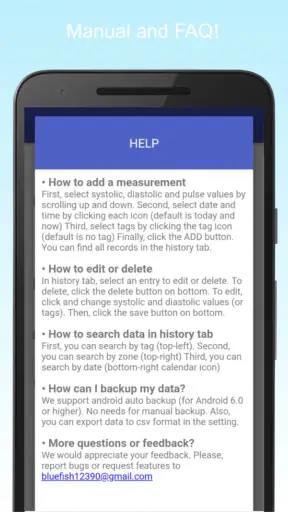
I would keep the first test simple: open the diary, enter one recent reading carefully, save it, and then return to confirm that the entry appears as expected. This small check catches typing mistakes and helps me understand the app’s rhythm before I have a week of information to manage. It is also a better first step than entering a long backlog from scraps of paper all at once.
A reliable routine for recovering a messy history
If my records become inconsistent, I would not try to repair everything from memory. I would start with the most recent trustworthy readings and continue from there. A clean new routine is often more useful than filling gaps with guesses. When transferring older notes, I would enter only figures I can identify confidently and leave uncertain details out of the working record rather than pretending they are precise.
One practical technique is to separate measuring from reviewing. I would measure, log the result, and continue with my day. At a later point, I would review the sequence for obvious entry errors, such as a pulse value placed in the wrong field or an upper value that does not match what I remember seeing on the monitor. This two-stage check reduces the chance that I will change a correct entry while distracted.
If an entry does not appear after saving, I would first check whether I actually completed the save action and whether I am looking at the correct part of the diary. I would then close and reopen the app, checking again without repeatedly creating duplicate entries. If the problem continues, I would avoid deleting the existing history in frustration. A clean record is valuable, and an aggressive reset can create a bigger problem than the original missing entry.
When an app behaves strangely after an update or installation, ordinary troubleshooting is reasonable: restart the phone, confirm that the operating system is supported, and try the action again with a single test record. I would also make sure I have enough device storage for normal operation. These checks are deliberately basic, but they distinguish a temporary phone problem from a repeatable issue inside the diary.
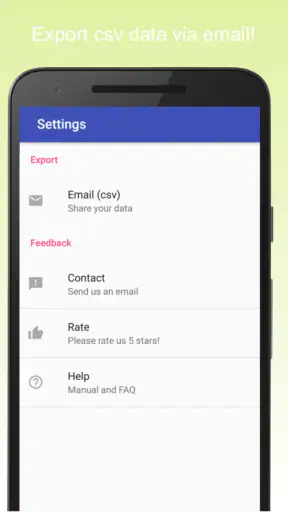
I would be cautious about relying on screenshots as a permanent backup. A screenshot can preserve what was visible at one moment, but it is awkward for finding trends and easy to lose among other images. If I need to show the history to a healthcare professional, I would use the app’s available viewing method and keep my original monitor notes until I am satisfied that the record is complete. I would not assume that every app can export or synchronize in the same way as a full medical platform.
That limitation is part of the trade-off here. A focused diary can feel calmer than a large health suite, but a larger suite may be better if I need automatic connections between several kinds of health information. I would choose Blood Pressure Diary when the central job is recording blood pressure and pulse with minimal distraction. I would choose something broader when sharing, integration, or a wider medical history is the priority.
When the app is not the cause of a worrying result
A carefully entered number can still be concerning, and the app should not become the target of blame simply because the result is unexpected. Blood pressure changes with stress, activity, posture, recent conversation, and measurement technique. If a result looks unusual, I would first sit quietly and follow the monitor’s instructions for a repeat measurement rather than immediately editing the diary to make the number look more familiar.
At the same time, I would not use repeated app entries to delay medical help. Severe symptoms or an urgent concern should be handled through appropriate medical services, not through a diary screen. The app is useful for preserving information that I can discuss with a professional; it is not a triage service and should not be treated as one.
The same caution applies when the monitor itself may be the weak link. An incorrectly positioned cuff, an unsuitable cuff size, movement during measurement, or a device that is not functioning properly can produce unreliable readings. Blood Pressure Diary has no way to inspect those conditions. If several results seem implausible, I would check the monitor setup and ask a healthcare professional to help assess the measuring process.
Medication changes create another situation where the diary needs context. I would not alter medication based on a pattern I think I see in the app. Instead, I would record the readings as accurately as possible and discuss the pattern with the person managing my care. A useful diary supports that conversation; it does not replace it.
For appointments, I would bring the phone and, if needed, explain how the readings were taken. The most useful record is not simply a long list of numbers. It includes a consistent routine and enough context for a professional to judge whether the measurements are comparable. If the app does not capture a detail I need, I would keep a short accompanying note rather than forcing extra information into the wrong field.
Who will appreciate this focused approach
I think Blood Pressure Diary is a good fit for someone who already has access to a home monitor and wants a dedicated place to log results. It is also suitable for a family member helping an older relative maintain a readable history, provided the person entering the information understands which number belongs in each field. The Everyone age rating makes it broadly approachable, but medical supervision still matters when the diary is being used for an actual condition.
It is particularly useful when paper notes have become difficult to follow. A phone-based record is easier to keep with the device I already carry, and a consistent digital history can be less vulnerable to misplaced pages. The app’s narrow purpose may also help users who become overwhelmed by large health dashboards and only want to focus on blood pressure and pulse.
I would skip it if I expect the phone to measure my pressure without external equipment, if I need a complete medication-management system, or if my main requirement is advanced sharing with a clinic. I would also look elsewhere if the supported operating-system level excludes my device. In those cases, the usual alternative—a paper diary, a broader health app, or software designed around a connected monitor—may better match the actual need.
The choice between paper and this app is not as simple as digital being automatically better. Paper can be faster when a caregiver is standing beside the monitor, and it does not depend on a charged phone or compatible software. The app becomes more attractive when I want entries available in one place and prefer reviewing a sequence on a screen. The best option is the one that produces complete, honest records consistently.
My practical verdict after using it as a diary
What I like most is the discipline created by a single-purpose tool. Blood Pressure Diary does not encourage me to turn every reading into a broad wellness project. I can treat it as a quiet log: measure properly, enter the values immediately, and review the history when I need to understand my routine or prepare for a conversation with a clinician.
The main friction is also clear. The app cannot improve a poor measurement, interpret a dangerous result, or rescue a history filled with uncertain entries. Users need to bring the measuring equipment, the correct technique, and a little consistency. Anyone expecting automatic medical guidance will likely find the experience too limited, while someone seeking a straightforward record may appreciate exactly that restraint.
With a free price, broad age rating, and a strong average rating of 4.8, it is an easy app to test on a supported phone. I would begin with one verified entry, establish a repeatable measuring habit, and avoid treating the diary as a diagnostic authority. After more than a million installs, it has clearly found an audience for this focused job, but its value still depends on how carefully the user measures and records.
My recommendation is simple: choose Blood Pressure Diary if you want a focused blood pressure and pulse log that stays out of the way. Keep a paper or clinician-recommended backup during the first days of use, check every entry before moving on, and seek medical advice for health concerns rather than waiting for the app to explain them. Used with those boundaries, Blood Pressure Diary is a practical companion for building a dependable record, not a substitute for professional care or a proper blood pressure monitor.


